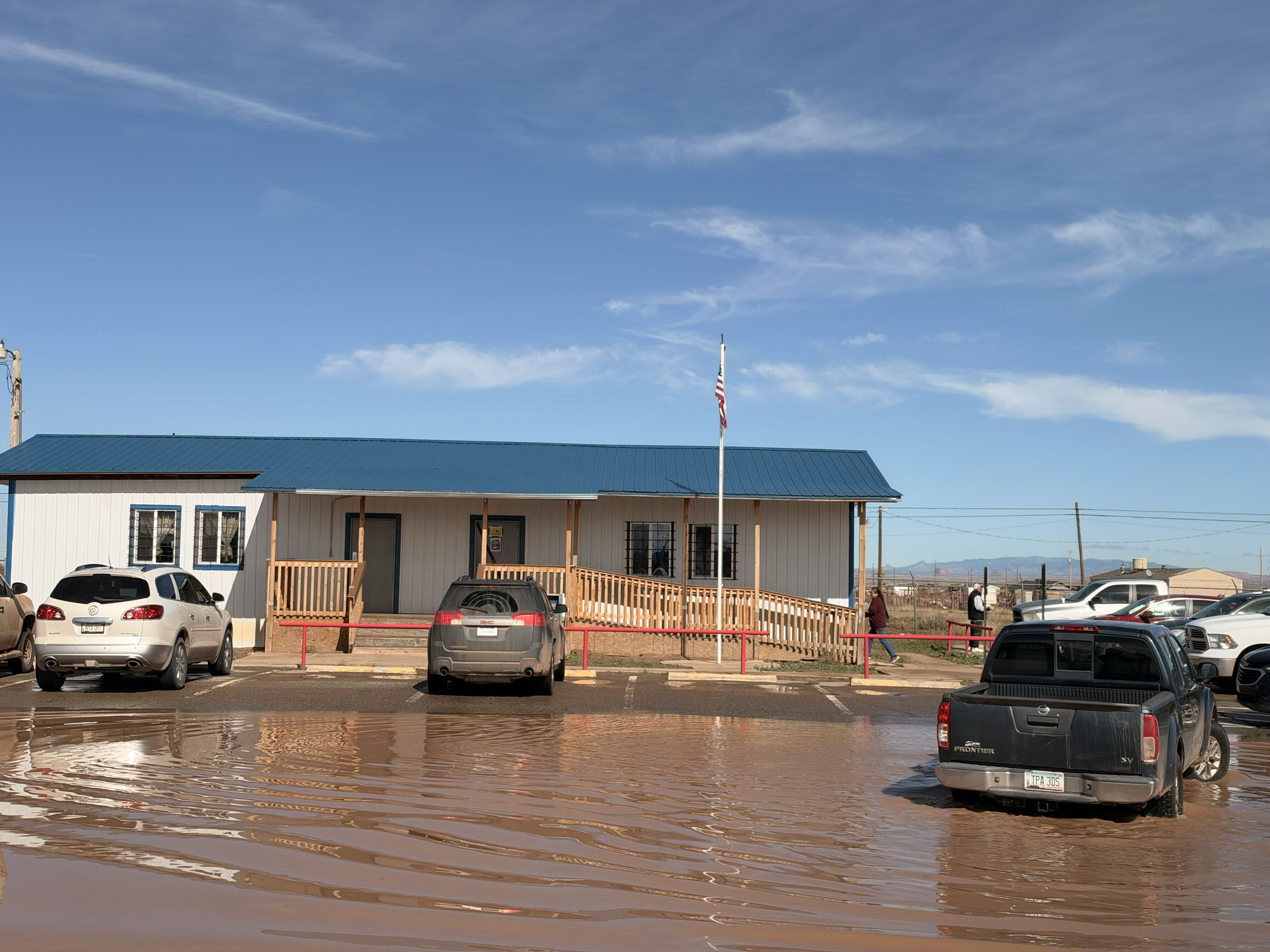
Election Day 2026 Many Farms, AZ, Navajo Nation, Apache County.
Nov. 22, 2026, 6:00 a.m. MT - Published in Arizona Central/Arizona Republic Sunday EditionJaynie Parrish For The Republic
Native voters faced flooded roads, displaced voting sites and limited early-voting access. Clearer emergency plans and better coordination could help before 2028.
What an election! Our organizers on the Navajo Nation, Hopi and White Mountain Apache lands expected our voters to face the usual challenges: long distances to vote centers, muddy dirt roads, missing voter identification, provisional ballots, weak internet signal and other voter education gaps.
Then the rains came.
The 72 hours leading up to Nov. 3 were full of catastrophic floods, evacuations and impassable roads. The governor declared a state of emergency, and that was when I realized that there's little clarity in our state about what happens when a natural disaster strikes on Election Day.
Seven White Mountain Apache communities were evacuated, and the whole reservation was under a shelter-in-place order.
On Hopi, a sand berm intended to keep the flood waters diverted gave way Monday night.
Local community member Theresa signed up to be a poll worker this year and knows firsthand the impacts of flooding. That sand berm caused Polocca Wash, which is in her backyard, to overflow.
The night before, police and emergency services asked many families to evacuate for safety. She was among that group to leave her home after 8 p.m. that night. Luckily, she and her family had a place to stay.
Navajo County didn't communicate any changes to voting or Election Day plans. So Theresa still showed up to help run her polling place. "This time it actually almost came into the front and back doors," she said. "But from what I could see when I worked that day, it was a mix of folks who couldn’t or didn't get through to vote and for other voters the flooding didn’t stop them from coming to the polls."
Neither did it stop local grassroots organizers. These are local stories from my fellow organizers.
Mud bog the Vote
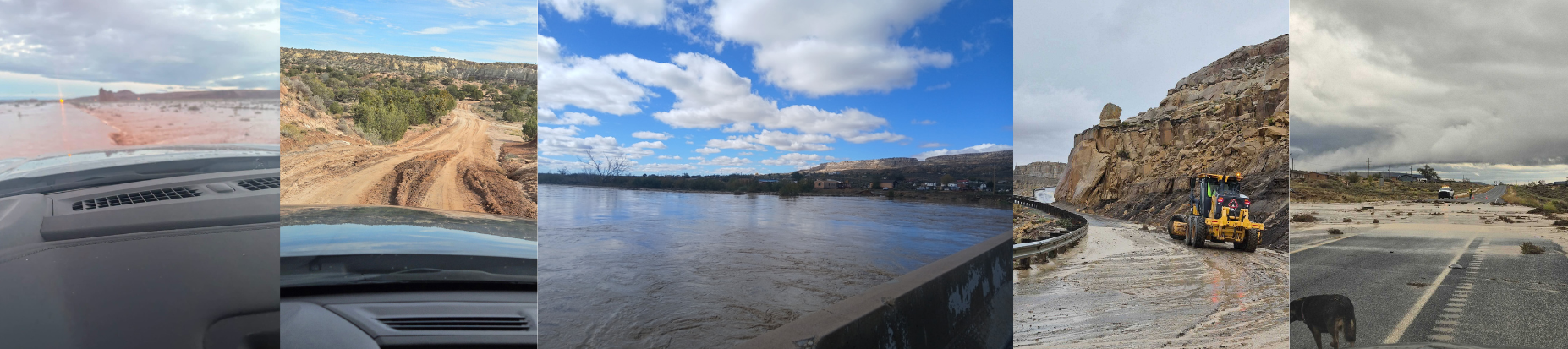
Mix of images of Election Day taken by ANV staff and from Hopi Emergency Response Facebook Page.
By Monday morning, we worked with folks at Yee Ha’ólníi Doo, also known as Navajo and Hopi Families COVID-19 Relief, to provide free rides and transportation assistance to anyone in impacted areas because of what our communities were experiencing. It was clear the election was moving forward no matter the natural disaster.
Other fellow organizers working with White Mountain Apache community members also launched emergency transportation. The tribal chairman shared it. "It sent a message that it was okay to go vote," while balancing community safety.
Shara, a White Mountain Apache tribal member and organizer, gave rides all day, covering almost 200 miles. Her longest went to Carrizo, an hour each way, for three men, one of whom spoke only Apache. The Carrizo polling place closed that day after most of its residents were evacuated because of devastating flooding. Its voters were sent 25 miles away to Canyon Day. Only 10 Carrizo votes were cast this year. What Shara accomplished that day was to give 30 percent of the people who managed to cast a vote a ride to the polls.
On the Navajo Nation, Triston, a community member and organizer, gave 21 rides. Many were grandmas without access to transportation. Reaching voters where roads washed out "was a whole task in itself," he said.
Partners stepped up, too. Yee Ha’ólníi Doo was brilliant and its staff, drivers and volunteers were stationed near communities that were most impacted by flooding, such as Dennehotso and Rock Point in the northernmost region of Apache County near the Utah border. A volunteer driver from Kayenta gave a voter in Chilchinbeto a ride to her nearest voter center, a 25-mile ride one way, then went to Cottonwood Blue Gap to pick up a voter who was 103 miles away. They voted. The groups are still adding up miles and geographic regions covered, but an estimate of more than 80 rides to the polls was provided and over 1,000 miles were driven on the Navajo Nation and Whiteriver tribal communities.
Confusion on the ground
The shelter-in-place order left many voters unsure whether they could leave home to vote. "They were like, well, if we can go vote, why couldn't we go to work?" Shara said.
In Chinle, the Navajo Nation tribal election ran the same day, and a 24-hour notice moved the Navajo election site. "That messaging wasn't clear," Triston said. "I think it caused more confusion for voters." The state polling place moved to a church, where a grandma told him, "I was always told we’re not welcome at the church," highlighting a need for more accessible and neutral spaces to vote. She went in and voted anyway.
At Hopi, Theresa's ExpressVote machine went down until a replacement arrived, so she set up extra tables for paper ballots. Provisional voters waited 15 to 20 minutes or more. People had to take more time to read and understand their ballots, especially the propositions. "My day didn't end until after 10, when the deputy stopped by to pick up the machines and the ballot box."
Triston, a community member and local organizer, provided 21 rides to the polls on Election Day and noticed that "county updates online did not match this reality. What folks were seeing on social media was a whole different story for the folks on the ground."
Lucy Ben, community member and organizer, received her last phone bank call came at 6:27 p.m. from a voter in Rock Point who had waited all day for a ride. "He said, 'We’re sitting in the water and he can't get out." The heavy-duty vehicle for flooded homes there came only that afternoon.
"Every voter who can't get to the polls is one we lose that day," Arizona Native Vote organizer Jenny said. "If you cast your vote but there was a problem with the signature, we can fight for that vote. But we can't fight if people can't get to the polls."
Lucy Ben and Maria Calamity, local organizers, went after every voter on their cure list. They didn’t give up and reached a voter named Helen near St. Michaels. They tackled a muddy road for two days running. "We had to go up the hill again, kind of slide around, but still we got in," Lucy said. They called Apache County together to successfully cure the ballot. "And we're happy. Now it's for us to get back down the hill."
Lucy and Maria noted that ballot curing worked because of relationships they built: Helen had been to an event they hosted earlier in the year and was phone banked four or five times. Maria added, "I'm sure we would have gotten more Native votes if we were able to do more curing, but we were limited by time, missing voter information, and the lists we received."
What we're asking
Distance, roads, timely communication and cell phone signals challenge us every election; flooding across our regions made everything worse. What would work better? The state, county and tribal leaders should move quickly on five things:
An emergency plan for elections. Arizona needs clear laws for voting during a state of emergency, including under shelter in place orders.
Transportation as voting access. Fund rides to the polls and have heavy-duty vehicles ready to reach flooded homes when polls open.
One clear message. When polling places move or close, counties, the state and tribes should speak with one voice, on the ground and not only online.
Backup at the polls. Rural and tribal polling places need spare machines, enough workers and faster provisional checks.
Room to vote early and to ballot cure. Hopi voters had one day of local in-person early voting, White Mountain Apache communities had two days at different locations, despite a much longer statewide early-voting period. Give community groups the time and access to reach every voter whose ballot needs fixing, especially in rural and tribal communities where it's so much more challenging than in urban spaces.
There is another lesson. We will continue to build on the culture of early voting, so a flood or any other natural disaster on Election Day costs fewer votes.
We are already gearing up for 2028 and having conversations with partners about transportation, education and communication for better coordination.
One voter at a time.
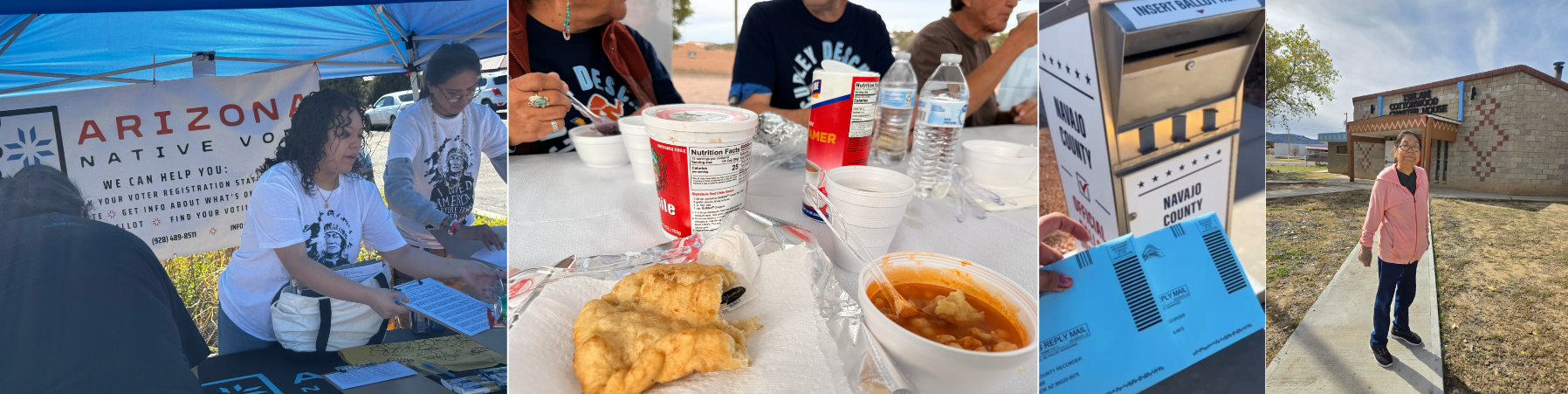
Mix of image taken from ANV staff and volunteers.
As we further analyze the data, we'll learn more, compare it with previous midterm elections and make plans. To date, Arizona Native Vote made 13,132 voter contacts this year. The numbers that stay with us are: three men from Carrizo, one grandma at a church door, the grandpa who was ready at 6 a.m. to make the hour drive to vote and the one voter at the top of a muddy hill.
After Election Day, Shara went right back to signing people in at the community food distribution. "That is my civic duty to my community," she said.
We left no voter behind that we could reach. Now we need policymakers to help us reach the rest. I am thinking of the voters in Dennehotso, Rock Point, Hopi and White Mountain Apache who couldn’t make it. The need to help voters does not go away after an Election Day.
Jaynie Parrish, Navajo Nation, is the founder and director of Arizona Native Vote, a nonprofit helping to boost Native American civic participation.