Apache County voters turned voices into change
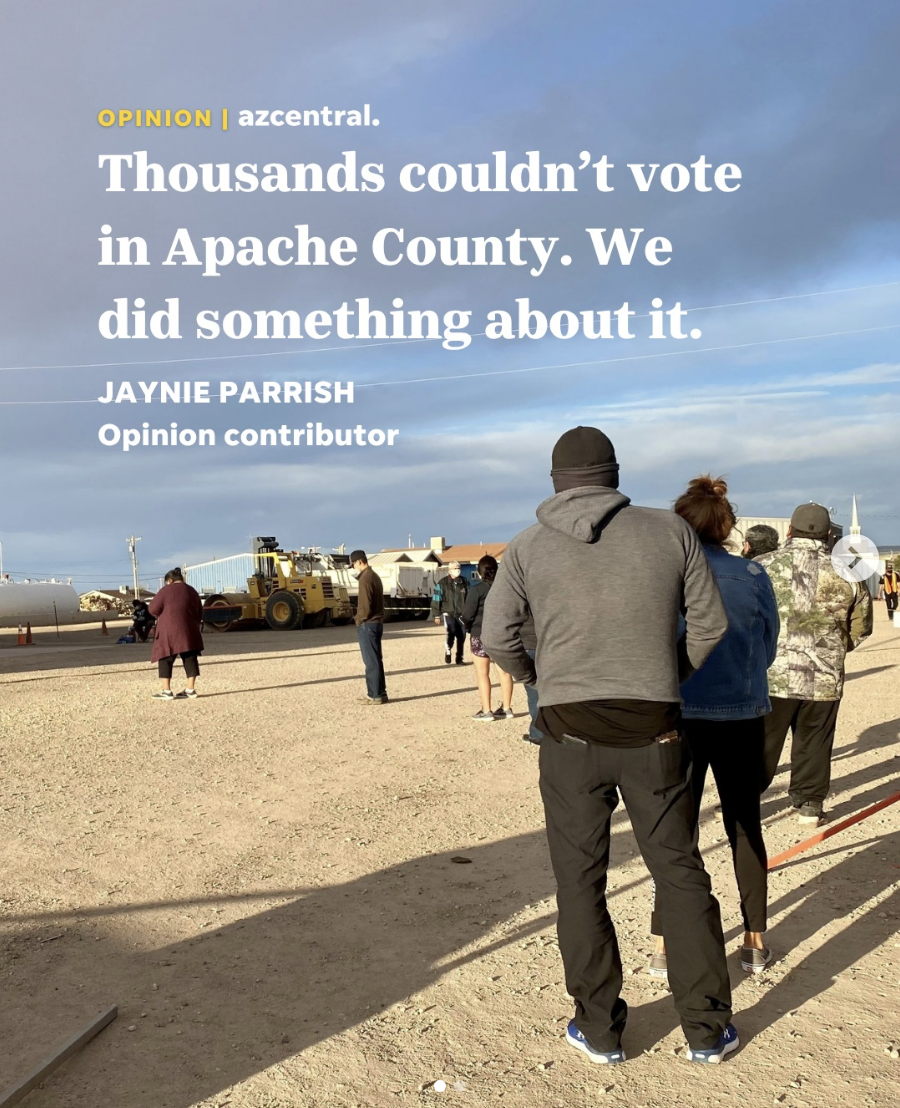
When thousands of Apache County voters couldn't vote in 2024, something had to be done. Groups rallied to add vote centers for more options.
Jaynie ParrishFor The Republic
April 9, 2026Updated April 14, 2026, 5:50 a.m. MT
Sometimes democracy works exactly the way it should.
On April 7, 2026, I witnessed this first hand in Ganado, a small community on the Navajo Nation in Apache County, where the county Board of Supervisors was meeting.
But to understand why it matters, you have to go back to the 2024 general election.
Apache County voting lines stretched for hours. People waited in the cold. When it looked like the slow pace was up against the end of the vote period, the Navajo Nation and lawyers moved quickly to extend polling hours. Some voters waited it out. Others, we don't know exactly how many, simply couldn't stay and went home. Every one of those votes lost was a failure.
It was a mess. Voters didn't know where to go and were turned away if they went to the wrong precinct. It was snowing and cold. Even the elders had to wait.
How do vote centers help rural or tribal voters?
The data confirmed what we saw that night. More than 3,000 voters in northeastern Arizona, mostly on the Navajo Nation, saw a dramatic spikein rejected provisional ballots.
The rejection rate of provisional ballots increased 710%, from 435 to 3,525 on tribal lands precincts compared to precincts off tribal lands. Apache County provisional ballot rejection rates were as high as 20% in some precincts. This was the highest I had ever seen, and it should not have been happening.
That data lit a fire with our Arizona Native Vote team. It told us exactly where the gaps were and how we could help voters cast their ballot successfully.
One of the clearest solutions was creating vote centers, a solution Apache County seemed reluctant to pursue. Navajo Nation leaders, county partners and a number of advocacy groups had been laying the groundwork toward this move for years.
This year vote centers gained momentum, because voters shared their stories.
How did Apache County add vote centers?
This past week, the Apache County Board of Supervisors added vote centers on their meeting agenda. We moved fast and saw this as a great opportunity to pitch in and contact voters who told us about their experience and let them know this was the time for them to share their stories.
We explained to voters what vote centers were and what it could mean — the freedom to vote at any location in the county, fewer wrong-precinct turn-aways, fewer rejected provisional ballots. They didn't hesitate. It was a no-brainer. And they wanted to say so themselves.
In a short period of time, we helped 54 Apache County voters submit public comments. For many, this was the first time they participated in this process. Some submitted signed letters. Some sent emails. Two of my colleagues — Triston Black and Caritina Vargas, both citizens of the Navajo Nation and Apache County voters — stood up in that meeting room and testified. One had been transporting voters to the polls; the other had been a line warmer, standing beside voters for hours in the cold. These were among the most powerful voices in the room.
In fact, there was standing room only at the meeting and it overflowed out the conference room doors.The Apache County Board of Supervisors listened. They voted to adopt vote centers.
This is democracy in action and the heroes were the voters. It was a joyous moment and people were happy.
We are grateful to every voter who shared their story, to tribal leadership and partners from the Navajo Nation who have been pushing this issue for years, and to the many advocates who made this a full-court press. Change like this doesn't happen in a vacuum. It takes a community.
How to prepare for the primary and general elections
This one reform may not solve everything, but it’s a step. We will see more threats to our voting rights like the SAVE Act. But ensuring every voter can cast their ballot has always been the goal.
What’s next? The work continues. With the primary election on July 21 and general election on Nov. 3, we have been making sure voters are prepared by helping community members gather their tribal citizenship and birth certificate documents for verification, obtain IDs, update their contact information, lock in GPS and Google Plus codes, check their voter status and make a plan to vote. We need voters to be reachable, ready and engaged long before Election Day.
This moment is worth celebrating. But it's also a reminder of what's possible when voters use their voices, show up and speak directly to their elected leaders. Our local government makes decisions that shape our daily life. What happened in Apache County on April 7 proves that those decisions can go your way. We have to keep up our participation.
Get involved. Tell your story. Use your power.
Jaynie Parrish, Navajo Nation, is the founder and director of Arizona Native Vote, a nonprofit helping to boost Native American civic participation.