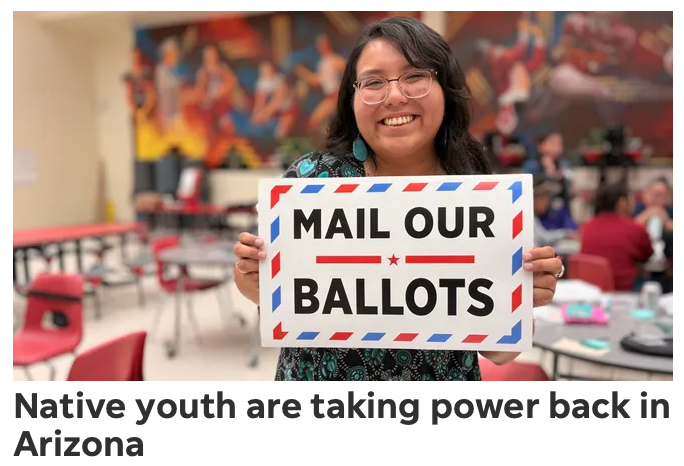
Native youth and elders gathered in Kayenta to learn about voting rights, organizing and leadership. Their work shows Arizona how democracy grows.
Jaynie Parrish For The Republic. Sept. 24, 2026, 9:48 a.m. MT (Digital publication) and Oct. 27, 2026 Sunday Print Edition
In Kayenta, Native youth and elders are showing Arizona what democracy looks like.
Young people from across tribal lands gathered to learn, organize and lead.
I like a line by Amy Poehler: "It's way easier to do scary things with friends."
That is exactly what I saw in Kayenta last week in a room full of young people doing scary things, talking about power, voting and leading.
The young people are from the Navajo Nation, the White Mountain Apache Tribe and the Hopi Tribe. They met tribal leaders from across Arizona and the Pechanga Band in Southern California. And they worked side by side with young organizers from Brooklyn and Queens, New York, who had just traveled across southern Arizona and Texas to be there.
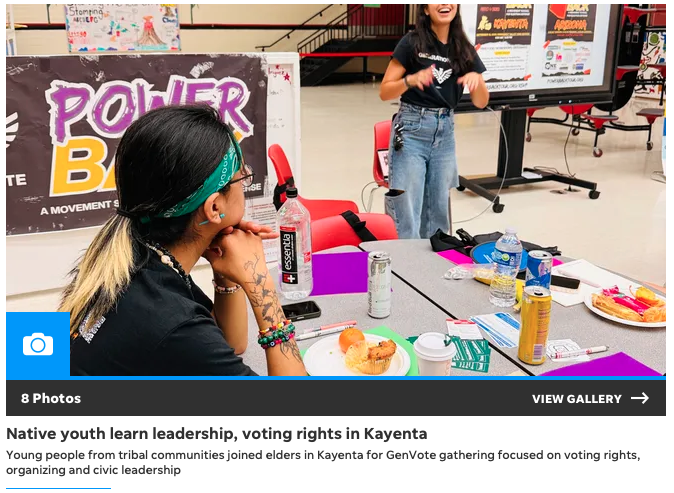
The gathering was part of Generation Vote's Power Back tour, a Movement School for Election Defense. There was training on how to organize, act as poll watchers, and fight for fair elections.
I spoke as a trainer. One of my messages was to think beyond Arizona's borders and see what we can learn from other places, such as the Native American Voting Rights Act in New Mexico.
So many different homelands, but always the larger goal of taking the power back.
Photo Gallery: Native youth are taking power back in Arizona
Young people know exactly what's at stake
Nobody had to tell these young people what matters. They told us.
Apache youth spoke about mining at the sacred site of Oak Flat. Hopi youth spoke about protecting the Grand Canyon and water. Navajo youth from Kayenta, who have grown up knowing the legacy of uranium mining in our communities, asked the hard and fair question: "Why is uranium mining happening on our lands again?"
They talked about the climate and jobs. They talked about a cost of living that puts so much of a basic life out of reach. They talked about housing, and in tribal communities that means something specific: a home that includes running water and electricity.
Teaira Frances, from Chinle, knows that reality firsthand.
She grew up without running water or electricity. Her home life was hard, and she ended up living with extended relatives while attending Monument Valley High School in Kayenta. She worked at the only grocery store in town.
"I remember when I got my first paycheck," she said. "I gave $20 to my aunt, $20 for my hygiene products, and the rest for me, and I tried to save. I went to school all day and worked after school until 10:30 p.m. I got up really early to do my homework at school and shower."
Then she explained why she came to the meeting and why she brought her younger relatives.
"I want them to learn and hear what everyone has to say. I tell them how I grew up because I want better for them," she said. "That's why I'm here."
That is what civic leadership looks like.
Elders brought the wisdom and are the backbone
What made this gathering special was the wisdom shared by elders. Forty-three people gathered at Kayenta Monument Valley High School. Youth and elders sat together, shared their concerns and figured out possible solutions together.
Frank Young, a local elder, spoke about his journey and how it led to sobriety. He credited the Navajo language, culture, and stories that helped him heal. He recalled a part of the Diné creation story when the people were plagued by monsters. Today's monsters, he said, are greed, AI, disconnection and disharmony, poverty and addiction. He's now a counselor helping others find recovery. He urged the students to hold on to their language and culture to ground their lives and their organizing work.
My mother, Rosie Parrish, joined the conversation, too. She is 82, an elder Firekeeper and a lifelong voter in both tribal and federal elections. When the conversation turned to women running for office, including Navajo Nation Council Speaker Crystalyne Curley's campaign for Navajo Nation president as well as the many Native women running for state and federal seats, my mother didn't hesitate.
"Of course women can be in charge," she said. "A woman can lead. I'm a woman and I've been leading my family for over 70 years."
She named her three daughters, who lead at work and at home, her granddaughter doing great things in college and her newborn great-grandchild, who received a Navajo name from the grandmothers, as our tradition holds.
Later, one young participant explained why he'd shown up: "I'm here because my grandma told me to come."
The room burst out laughing, because after that conversation about women leading, it was the perfect answer.
Steve Begay, an elder and member of the Navajo Voters Coalition, came to listen and offered his own blessing.
"This is exactly what we want and what we've been hoping for," he said. "And it's happening. Young people being engaged and leading."
Arizona's turn
That's the kind of collective effort Arizona needs to build toward its own Native American Voting Rights Act and to build lasting infrastructure for the future our communities want.
Most of all, they left with each other. The trust, love and friendship growing among these young people is something beautiful to witness.
It's way easier to do scary things with friends.
And these young people, backed by their elders, are ready to do big things.
Jaynie Parrish, Navajo Nation, is the founder and director of Arizona Native Vote, a nonprofit helping to boost Native American civic participation.
Native youth learn leadership, voting rights in Kayenta
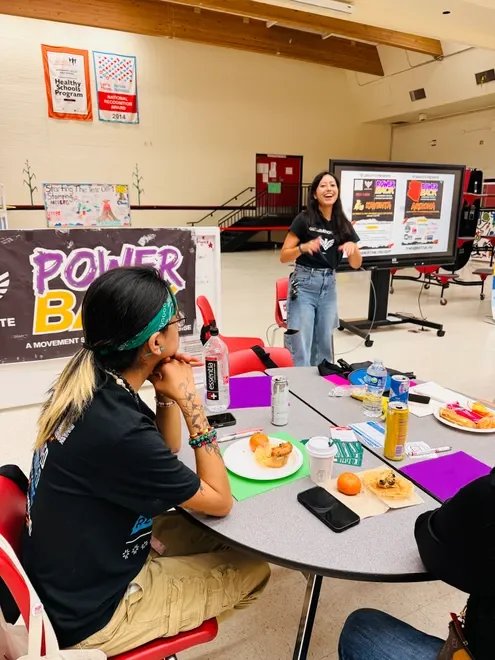
Brianna Cea from Queens, NY opens the Power Back Movement School day. She is the founder of Generation Vote. Provided By Jaynie Parrish
Opinion:Native youth are taking power back in Arizona
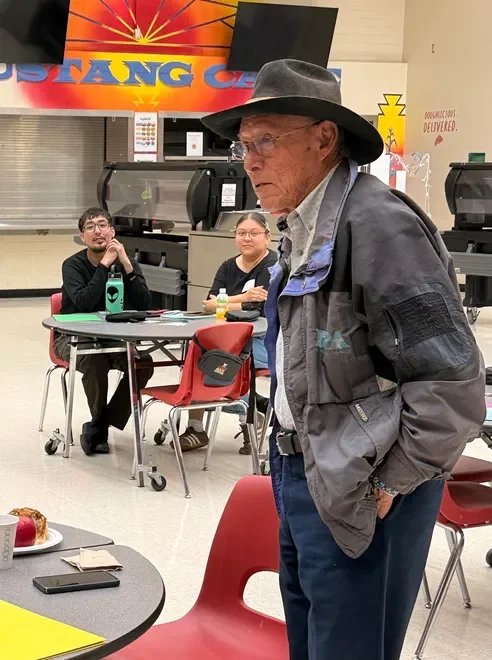
Elder Steve Begay of Navajo Nation, shares words of wisdom with students in Kayenta. Steve is from St. Michaels, AZ. Provided By Jaynie Parrish
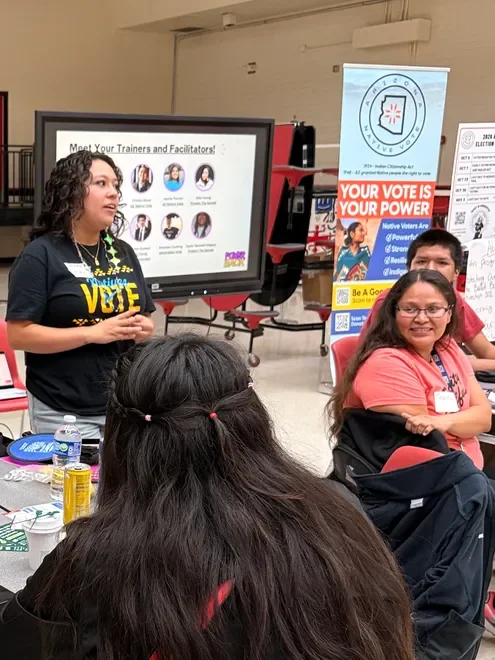
Kaia Aiello of White Mountain Apache Tribes introduces herself in her language. She was joined three other kids from her community in Whiteriver, AZ. Provided By Jaynie Parrish
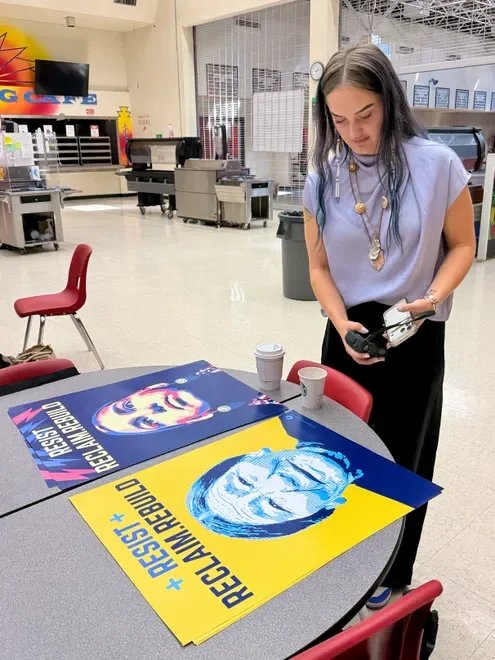
Leila Winbury, citizen of Pechanga Band of Indians and board member for GenVote, at Power Back in Kayenta. Provided By Jaynie Parrish
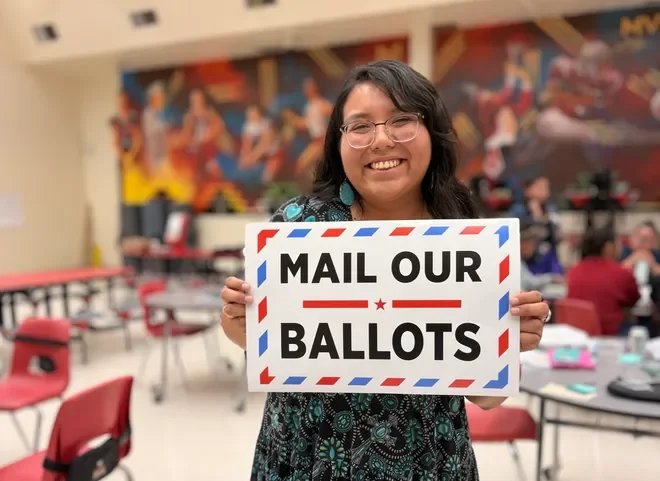
Ellerie, participant of the Power Back Tour in Kayenta. Provided By Jaynie Parrish
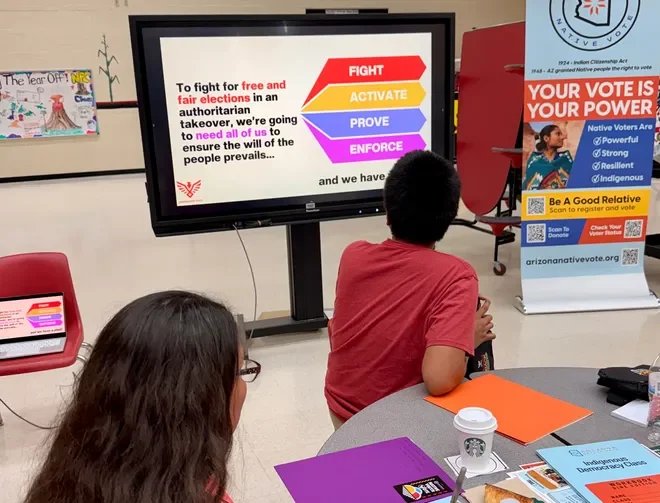
Participants of the Power Back Tour in Kayenta. Provided By Jaynie Parrish
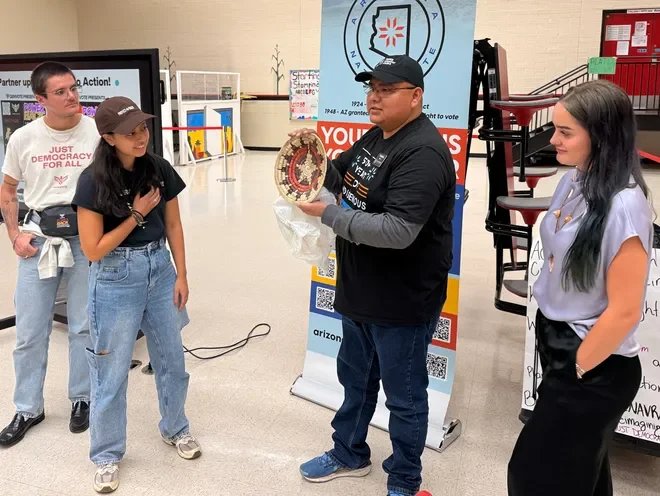
Triston Black presents a Navajo basket to Generation Vote board members for including Navajo Nation in the Power Back Tour. Provided By Jaynie Parrish
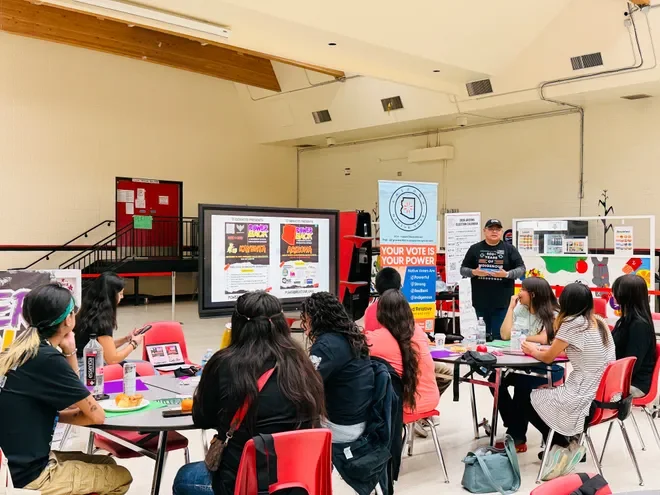
Triston Black of Navajo Nation, talks about Indigenous Democracy Classes, a civics course, being taught in high schools on Navajo, Hopi, and Apache lands. Provided By Jaynie Parrish