Vote together
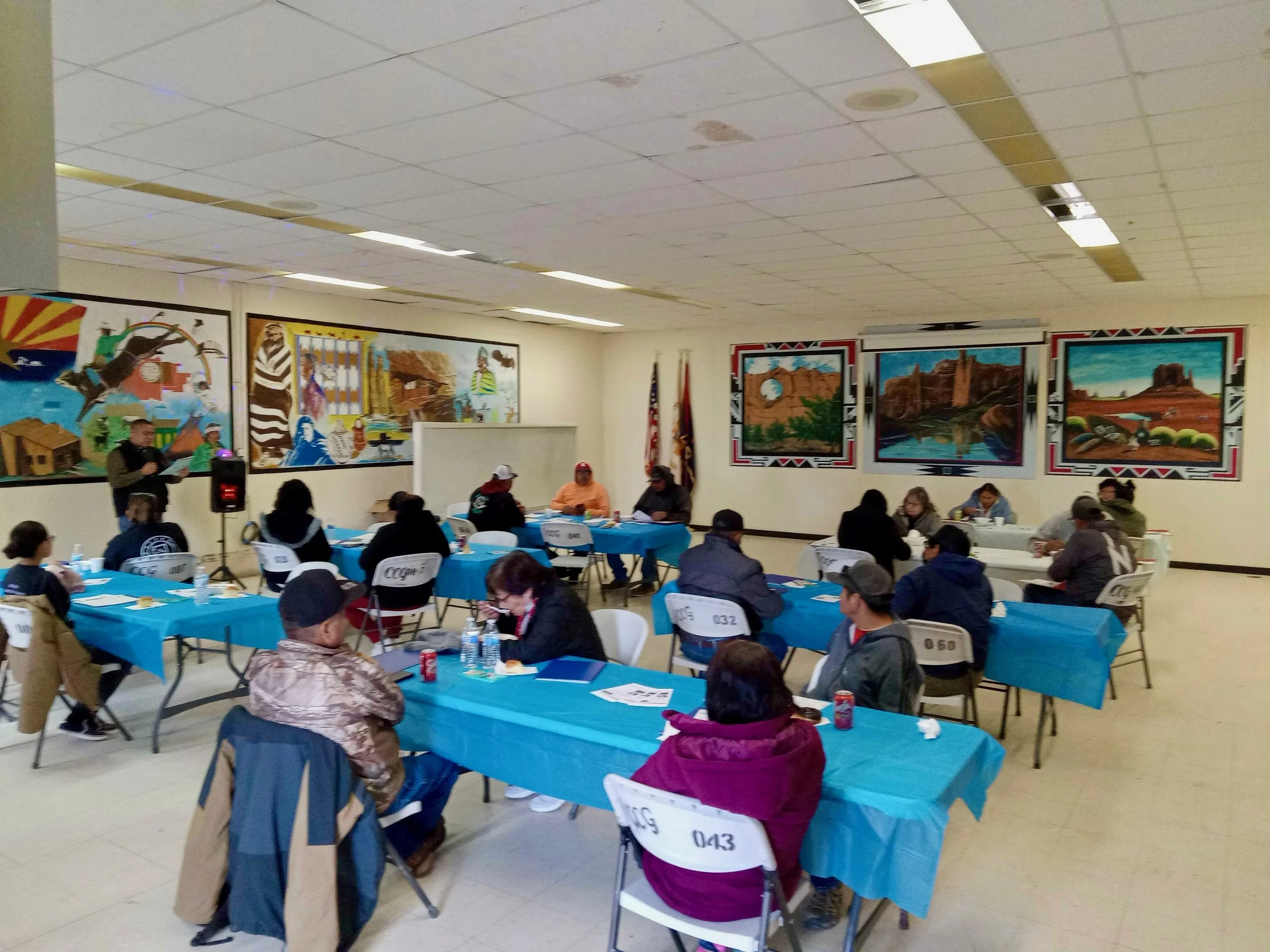
ANV Socks & Stew event in Chinle
Letter | Vote together
Vote together
Editor,
There’s a Diné concept that is spoken widely among Navajo people during voting: ada’iinííłjį’ adahwiishzhiizh. It means getting out the vote or it’s time to vote, but it’s bigger than oneself. It’s a generational practice of defining leadership, selecting leaders, and is a sacred duty of the community. Long before “relational organizing” became a buzzword in political circles, our Indigenous communities were already living it. Now, as the 2026 election cycle ramps up, that same concept is becoming one of the most powerful tools for getting out the vote, specifically on the Navajo Nation and surrounding tribal communities.
Nahat’á bízhneedlį – love of service
At its core, relational organizing is fundamental to the community’s wellbeing. People are far more likely to register, show up, or vote when the invitation comes from someone they already trust. That’s your parents, grandparents, a coach, an elder, or an Arizona Native Vote firekeeper. In my community, this isn’t a new tactic from a campaign book. It’s an extension of how decisions have always been made through the community, at the chapter house, sitting in during ceremonies, and even through grassroots organizations who are respected because of their relationships they built from the ground up and made an equal playing field for everyone.
What’s changed is that organizers are now formalizing these networks by mapping where everyone is located, training a new generation of leaders, and giving community members simple tools to have real conversations with the people they already know, rather than relying on others who often never reach our most rural communities.
Hółdziil bee asdzį́ – empowering: what it looks like on the ground
Organizations working in rural and tribal communities like Arizona Native Vote, local nonprofits, tribal programs, and youth-led groups have built out relational organizing programs that share a common goal: sharing trusted information from a trusted relative. These are the people who already sit at the center of family and community networks like our matriarchal relatives, the mothers, the grandmas, the aunties, and women leaders.
Instead of handing volunteers with a script, organizers help relatives understand and connect to the why. Why this election matters, what’s on the ballot, where and how do I vote. The conversations we share are in their own words, even greeting our voters with “yá’át’ééh shimásání” (hello grandma) can go a long way in establishing kinship in relational organizing.
Motivating young and first-time voters in 2026 requires relationship driven organizing that meets young people where they are. A few approaches that organizers can develop and maintain in their communities:
Connecting young people to meaningful conversations. Rather than treating young people purely as voters who need to vote, it’s essential we recruit them as organizers within their own peer networks. Meaning we got to recognize that an 18-year-old talking to their cousin and uncle to vote will always outperform a flyer.
Framing civic participation as an extension of responsibility to the community. Voting framed as “showing up for your relatives and your nation,” tends to land differently than voting in thought.
Meeting young voters on platforms and in the lingo they use. Short video content creation, group chats, Native humor that brings a laugh while still routing the conversation of “did you vote” from a trusted relative or friend. Have fun with it!
For first time voters comes uncertainty. Where to vote, what ID do I need, whether they can vote by mail or in-person, these are often more barriers than opportunities to engage with a new voter. Relational organizers can answer these questions personally and ease voting fatigue.
Last but not least, connecting the ballot to the issues. Education, water rights and access, health care, tribal sovereignty, or funding infrastructure are questions that show up on both tribal and state/federal ballots. Turnout tends to rise when the stakes feel local and directly impact our tribal communities.
Álą́ąjį’ tsídzookos – looking forward
Relational organizing isn’t a replacement for the harder structural work like addressing rural address, ID and documentation of citizenship in tribal communities, expanding polling locations, or voter information in our Navajo language; these are challenges that matter and are ongoing.
Yet, relational organizing is often the difference between a well-designed civic engagement plan on paper and it reaching people in their communities, at the chapter house, or in the hogan. On the Navajo Nation, there is a teaching “k’é hwiinidzingo t’áá hazááká bił nijilnish,” where kinship has always been the source for how communities function, it’s a relearning of something that was already there and now is redefining how we show up at the ballot box.
The organizations doing this work aren’t the oneswith the biggest budgets. They’re the ones who understand that on the Navajo Nation and surrounding tribal communities, the vote moves the way everything important has always moved here, relative to relative.
Triston Black
Organizing director
Arizona Native Vote
Tsaile, Arizona